Quick Answer: For babies under 12 months: a firm, flat mattress with a fitted sheet only — no loose bedding. For toddlers (12 months+): a lightweight hypoallergenic comforter and fitted sheets in breathable cotton. For kids 3 and up: full bedding sets with washable, hypoallergenic materials. Scroll to the Age Guide below for specific recommendations by stage.
Buying bedding for a child's room is a different challenge than buying for yourself. Safety comes first — especially for babies and toddlers, where the wrong bedding choice is not just uncomfortable but carries real risk. Then there's practicality: kids' bedding gets washed far more frequently than adult bedding, so durability and easy-care properties matter more than they do for a guest room.
This guide walks through every age stage — from newborn nursery setup through school-age kids' rooms — with specific material recommendations, safety guidelines, and practical washability advice so you can choose with confidence.
Nursery Safety: What the Research Actually Says
The safest sleep environment for a baby under 12 months is a firm, flat surface with nothing else in the crib. This isn't overly cautious — loose bedding, pillows, bumpers, and soft toys in a crib are associated with suffocation risk in infants who can't yet lift or turn their heads reliably.
The safe sleep guidelines are straightforward to follow, and they don't mean your nursery has to look bare. A beautifully made-up crib for photos is fine — but when baby is sleeping, the crib should contain only the mattress and a fitted sheet.
Safe Sleep by Age: What Goes in the Crib
| Age | What Is Safe | What to Avoid |
|---|---|---|
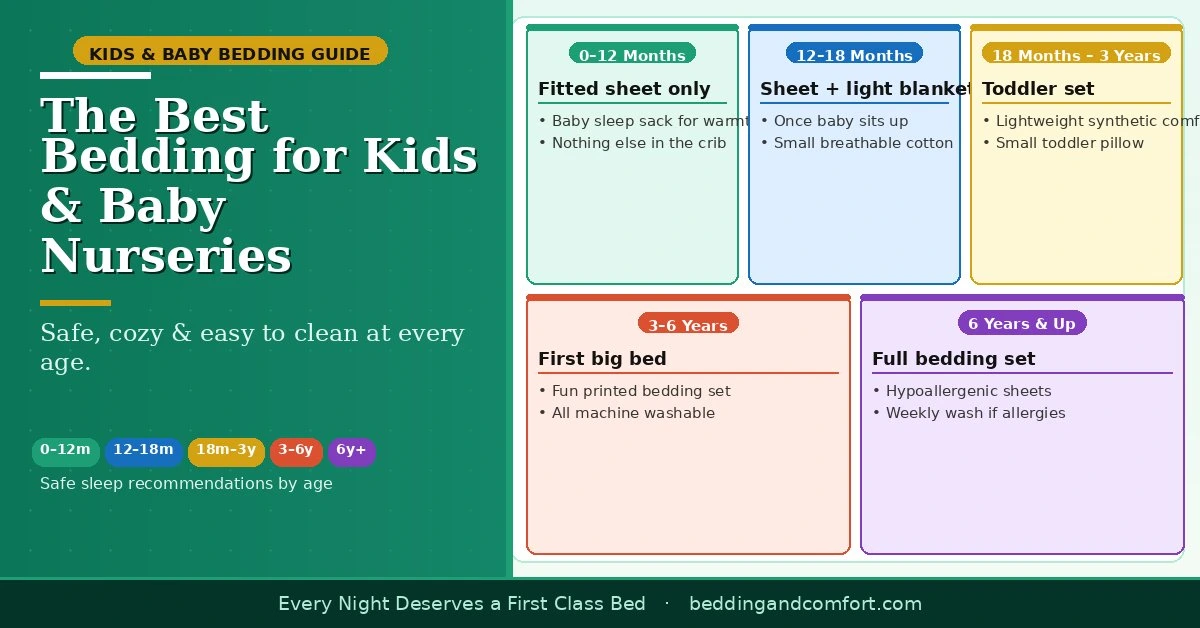
| 0–12 months | Firm flat mattress + fitted sheet only. Baby sleep sack for warmth. | Loose blankets, pillows, bumpers, stuffed animals, positioners |
| 12–18 months | Fitted sheet + one small, lightweight blanket once they can sit up independently | Large pillows, heavy comforters, bumpers still not recommended |
| 18 months–3 years | Toddler-size fitted sheet + lightweight hypoallergenic comforter + small toddler pillow | Adult-size pillows, very thick or heavy comforters |
| 3 years and up | Full bedding set — fitted sheet, flat sheet or duvet, standard pillow, decorative elements | No specific restrictions — focus on washability and hypoallergenic materials |
Best Materials for Kids' Bedding
Children's bedding needs to meet a higher standard than adult bedding on three measures: hypoallergenic properties (children's skin and airways are more sensitive), durability under frequent washing, and breathability (children tend to run warmer than adults and overheat more easily during sleep).
Pros of Each Material for Kids' Bedding
- 100% cotton percale — the gold standard for children's sheets. Breathable, hypoallergenic, gets softer with washing, and handles frequent washing at higher temperatures without degrading. Best all-round choice for all ages.
- Microfiber — extremely soft immediately out of the packet, very affordable, and wrinkle-resistant. Good budget option for older kids (3+). Not ideal for babies — less breathable than cotton.
- Organic cotton — grown and processed without pesticides or harsh chemicals — the safest choice for newborns and babies with sensitive skin or eczema. Look for GOTS (Global Organic Textile Standard) certification.
- Bamboo-cotton blend — excellent moisture-wicking and naturally temperature-regulating. A strong choice for children who sweat heavily during sleep or have sensitive skin.
- Synthetic fill (comforters) — hypoallergenic, machine washable, and significantly more affordable than down. The clear first choice for children's comforters — easy to wash frequently without degradation.
Materials to Avoid for Young Children
- Down fill for under 3s — harder to wash at home and can trigger allergic reactions in sensitive children.
- Wool — can be scratchy on sensitive skin and difficult to wash frequently at home.
- Satin or silk — too slippery for young children and not durable enough for frequent washing.
- Heavily fragranced or chemically treated fabrics — can trigger respiratory irritation in sensitive children. Always wash new bedding before first use.
Age-by-Age Bedding Guide
Newborn to 12 months — the minimalist crib:
A firm crib mattress with a fitted crib sheet is all you need — and all that's safe. For warmth, use a baby sleep sack (also called a wearable blanket) sized to the baby's weight. These zip around the baby and provide warmth without any loose fabric risk. Two fitted crib sheets are the practical minimum — one on, one in the wash. Three is ideal.
12 to 18 months — the transition stage:
Once a baby can sit up independently and move freely in the crib, a small lightweight blanket can be introduced. Choose a breathable cotton or muslin blanket sized for a crib — not a full adult throw. Continue using a fitted crib sheet underneath. A toddler pillow is not needed yet at this stage.
18 months to 3 years — toddler bed transition:
When transitioning to a toddler bed, a lightweight hypoallergenic comforter (synthetic fill, not down) in a toddler size paired with a toddler pillow (smaller and lower loft than an adult pillow) gives the child a comfortable, safe sleep surface. Use a fitted sheet beneath the comforter rather than a flat sheet — toddlers move significantly during sleep and a flat sheet becomes a tangle risk.
3 to 6 years — first big bed:
Moving to a twin or single bed opens up full bedding sets. Choose a comforter set in a fun print or character theme they love — it genuinely helps with the transition. Keep the fill lightweight (synthetic, not heavy down), the sheets in 200–300 thread count cotton or microfiber, and prioritise machine washability on everything. At this age, bedding goes through the wash significantly more than adult bedding.
6 years and up — school-age bedroom:
By school age, children's bedding requirements are similar to adults — the primary differences are size (twin or full rather than queen) and the continued emphasis on easy-care, machine-washable materials. If a child has year-round allergies, prioritise hypoallergenic certified bedding and wash sheets weekly at 60°C to manage dust mite exposure.
Kids' Bedding & Washing: What to Know
Children's bedding gets washed far more often than adult bedding — spills, accidents, and illness mean some items may need washing weekly or even more frequently. Every piece of bedding you choose for a child's room should be machine washable on a warm or hot cycle and tumble dryer safe. Anything requiring dry cleaning or delicate hand washing is impractical for a child's room.
Practical Washing Rules for Kids' Bedding
- Wash all new bedding before first use — removes manufacturing residues and chemical finishes that can irritate sensitive skin.
- Sheets and pillowcases: wash weekly in warm water (or hot if allergies are present).
- Comforters: wash monthly — more frequently than adult comforters due to higher accident risk.
- Use fragrance-free, hypoallergenic detergent for all children's bedding — fragrance is one of the most common skin irritants in young children.
- Always dry completely before putting back on the bed — damp fill in a child's comforter creates a mould risk.
Quick-Pick Guide: Best Bedding by Age
0–12 months: Firm crib mattress • 2–3 fitted crib sheets in organic cotton • Baby sleep sack for warmth • Nothing else in the crib
12 months – 3 years: Fitted crib or toddler sheet in breathable cotton • Lightweight muslin or cotton blanket • Small toddler pillow from 18 months
3 years and up: Cotton or microfiber fitted sheet • Lightweight synthetic comforter • Standard pillow • Fun printed bedding set • All machine washable
The Bottom Line
The best children's bedding is safe first, washable second, and comfortable third — in that order. Start with organic cotton fitted sheets and a baby sleep sack for the nursery, transition to a lightweight synthetic comforter and toddler pillow, and graduate to a full bedding set as they grow. Keep everything machine washable and hypoallergenic throughout.
At Bedding and Comfort, our kids and baby section carries bedding sets, fitted sheets, and accessories across every age stage — all designed with easy home care in mind.
